Why Today's Foreclosure Numbers Are Nothing Like 2008
Why Today's Foreclosure Numbers Are Nothing Like 2008
You’ve likely seen headlines about the number of foreclosures climbing in today’s housing market. That may leave you with a few questions, especially if you’re thinking about buying a house. Understanding what they really mean is mission-critical if you want to know the truth about what’s happening today.
According to a recent report from ATTOM, a property data provider, foreclosure filings are up 6% compared to the previous quarter and 22% since one year ago. As media headlines call attention to this increase, reporting on just the number could actually generate worry and may even make you think twice about buying a home for fear that prices could crash. The reality is, while increasing, the data shows a foreclosure crisis is not where the market is headed.
Let’s look at the latest information with context so we can see how this compares to previous years.
It Isn’t the Dramatic Increase Headlines Would Have You Believe
In recent years, the number of foreclosures has been down to record lows. That’s because, in 2020 and 2021, the forbearance program and other relief options for homeowners helped millions of homeowners stay in their homes, allowing them to get back on their feet during a very challenging period. And with home values rising at the same time, many homeowners who may have found themselves facing foreclosure under other circumstances were able to leverage their equity and sell their houses rather than face foreclosure. Moving forward, equity will continue to be a factor that can help keep people from going into foreclosure.
As the government’s moratorium came to an end, there was an expected rise in foreclosures. But just because foreclosures are up doesn’t mean the housing market is in trouble. As Clare Trapasso, Executive News Editor at Realtor.com, says:
“There’s no reason to panic, at least not yet. Foreclosure filings began ticking up . . . after the federal foreclosure moratorium ended. The moratorium was enacted in the early days of COVID-19, when millions of Americans lost their jobs, to prevent a tsunami of homeowners losing their properties. So some of these proceedings would have taken place during the pandemic but got delayed due to the moratorium. This is a bit of a catch-up.”
Basically, there’s not a sudden flood of foreclosures coming. Instead, some of the increase is due to the delayed activity explained above while more is from economic conditions. As Rob Barber, CEO of ATTOM, explains:
“This unfortunate trend can be attributed to a variety of factors, such as rising unemployment rates, foreclosure filings making their way through the pipeline after two years of government intervention, and other ongoing economic challenges. However, with many homeowners still having significant home equity, that may help in keeping increased levels of foreclosure activity at bay.”
To further paint the picture of just how different the situation is now compared to the housing crash, take a look at the graph below. It shows foreclosure activity has been lower since the crash by looking at properties with a foreclosure filing going all the way back to 2005.
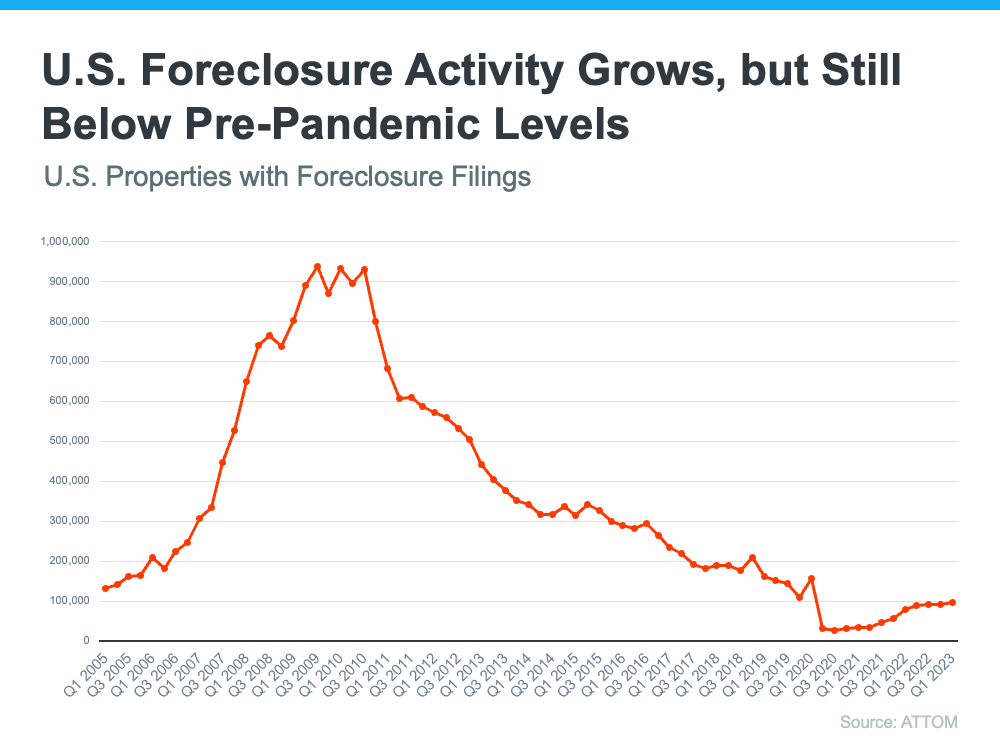
While foreclosures are climbing, it’s clear foreclosure activity now is nothing like it was during the housing crisis. In addition to all of the factors mentioned above, that’s also largely because buyers today are more qualified and less likely to default on their loans.
Today, foreclosures are far below the record-high number that was reported when the housing market crashed.
Bottom Line
Right now, putting the data into context is more important than ever. While the housing market is experiencing an expected rise in foreclosures, it’s nowhere near the crisis levels seen when the housing bubble burst, and that won’t lead to a crash in home prices.
Categories
- All Blogs 439
- Arlington, TX 5
- best deal 1
- brokerage 1
- build your home 39
- builders 21
- building a business 2
- burleson 3
- buyers market 126
- buying a home 255
- closing costs 37
- Community 9
- condominiums 12
- credit 8
- Dallas 2
- dallas property tax 1
- dallas real estate 51
- DFW Lifestyle 15
- dfw property tax 1
- down payment 41
- down payment assistance 2
- downsizing 24
- finances 37
- first time home buyer 130
- for sale by owner 11
- Fort Worth 3
- Fort Worth real estate 49
- home affordability 118
- home equity 41
- home insurance 6
- home loan 89
- home ownership 159
- home price 103
- home tips 69
- home value 100
- housing market 187
- interest rates 69
- investment 32
- leasing 2
- listing agent 13
- Living in DFW 9
- Living In Texas 5
- local events 3
- lower interest rate 6
- luxury homes 3
- Mansfield real estate 48
- Mansfield, TX 6
- Midcities 2
- Midlothian, TX 3
- money savings 1
- mortgage 77
- mortgage rates 64
- moving to Texas 12
- neighborhood news 1
- new construction 23
- new home 53
- owning a home 61
- preapproval 28
- pricing your home 65
- property management 7
- property taxes 1
- real estate 202
- real estate agents 4
- real estate taxes 2
- real estate tips 181
- realtors 3
- relocating 5
- relocating to Texas 12
- rental 3
- renting 8
- savings 14
- school districts 2
- second home 26
- sellers 125
- selling and buying a house at the same time 1
- selling your home 135
- senior living 16
- state income tax 1
- texas property tax 1
- texas taxes 1
- vacation home 5
- Veterans 3
- wealth 14
Recent Posts









GET MORE INFORMATION