Are We Heading into a Balanced Market?

Are We Heading into a Balanced Market?
If you’ve been keeping an eye on the housing market over the past couple of years, you know sellers have had the upper hand. But is that going to shift now that inventory is growing? Here’s a breakdown of what you need to know.
What Is a Balanced Market?
A balanced market is generally defined as a market with about a five-to-seven-month supply of homes available for sale. In this type of market, neither buyers nor sellers have a clear advantage. Prices tend to stabilize, and there’s a healthier number of homes to choose from. And after many years when sellers had all the leverage, a more balanced market would be a welcome sight for people looking to move. The question is – is that really where the market is headed?
After starting the year with a three-month supply of homes nationally, inventory has increased to four months. That may not sound like a lot, but it means the market is getting closer to balanced – even though it’s not quite there yet. It’s important to note this increase in inventory is not leading to an oversupply that would cause a crash. Even with the growth lately, there’s still nowhere near enough supply for that to happen.
The graph below uses data from the National Association of Realtors (NAR) to give you an idea of where inventory has been in the past, and where it’s at today:
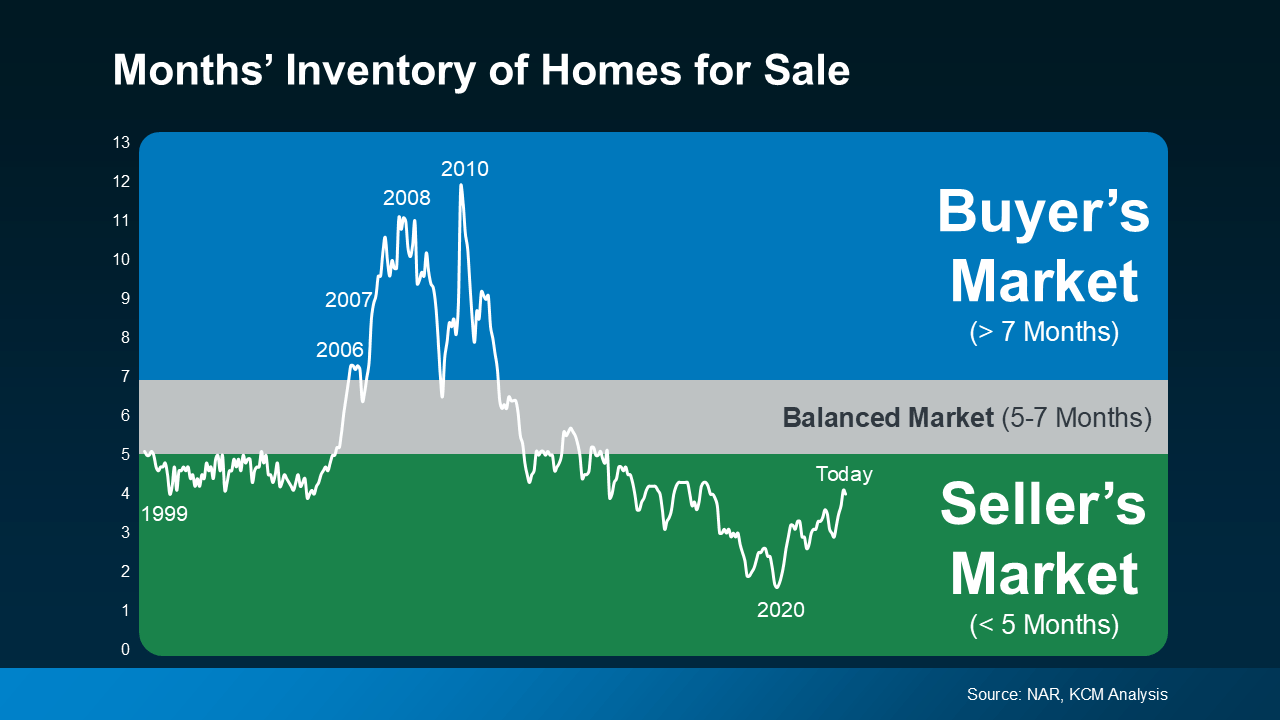 For now, this is still seller’s market territory – it’s just not as frenzied of a seller’s market as it’s been over the past few years. As Mark Fleming, Chief Economist at First American, says:
“The faster housing supply increases, the more affordability improves and the strength of a seller’s market wanes.”
What This Means for You and Your Move
Here's how this shift impacts you and the market conditions you'll face when you move. Lawrence Yun, Chief Economist at NAR, explains:
“Homes are sitting on the market a bit longer, and sellers are receiving fewer offers. More buyers are insisting on home inspections and appraisals, and inventory is definitively rising on a national basis.”
The graphs below use the latest data from NAR and Realtor.com to help show examples of these changes:
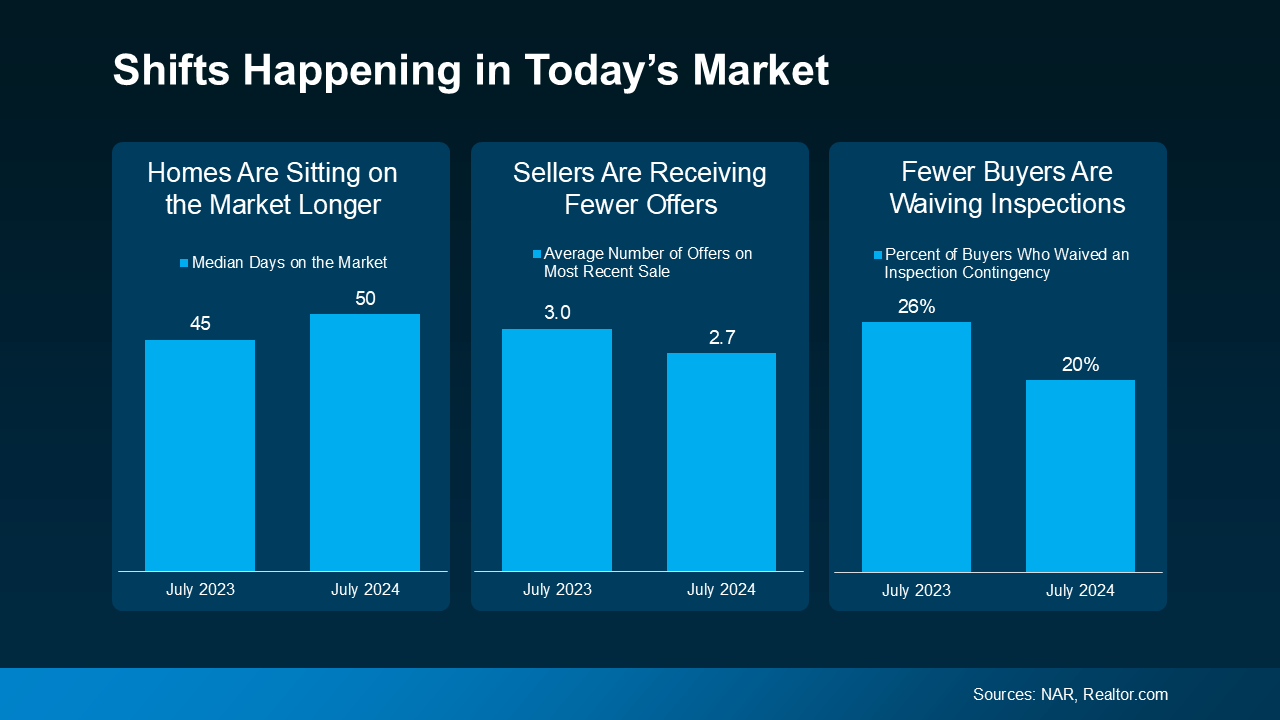 Homes Are Sitting on the Market Longer: Since more homes are on the market, they’re not selling quite as fast. For buyers, this means you may have more time to find the right home. For sellers, it’s important to price your house right if you want it to sell. If you don’t, buyers might choose better-priced options.
Sellers Are Receiving Fewer Offers: As a seller, you might need to be more flexible and willing to compromise on price or terms to close the deal. For buyers, you could start to face less intense competition since you have more options to choose from.
Fewer Buyers Are Waiving Inspections: As a buyer, you have more negotiation power now. And that’s why fewer buyers are waiving inspections. For sellers, this means you need to be ready to negotiate and address repair requests to keep the sale moving forward.
How a Real Estate Agent Can Help
But this is just the national picture. The type of market you’re in is going to vary a lot based on how much inventory is available. So, lean on a local real estate agent for insight into how your area stacks up.
Whether you’re buying or selling, understanding how the market is changing gives you a big advantage. Your agent has the latest data and local insights, so you know exactly what’s happening and how to navigate it.
Bottom Line
The real estate market is always changing, and it’s important to stay informed. Whether you’re buying or selling, understanding this shift toward a balanced market can help. If you have any questions or need expert advice, don’t hesitate to reach out.
Categories
- All Blogs 508
- Buying A Home 76
- Community Neighborhood Guides 22
- DFW Lifestyle 51
- Eat, Drink, & Shop Local 19
- First Time Home Buyer Tips 169
- Homeownership Tips & Tricks 25
- Living in Arlington, TX 15
- Living in Burleson 15
- Living in Dallas Fort Worth Metroplex 84
- Living In Texas 24
- Mansfield, TX 20
- Midlothian, TX 20
- Mortgage Rates, Financing, and Affordability 42
- New Construction & Developments in DFW 15
- Real Estate Investing 38
- Real Estate News 77
- Rentals, Property Management, & Leasing 13
- Selling Your House 167
- Texas Relocation Guide 55
- Things To Do in DFW 13
Recent Posts









MY BLOGS
- North Arlington vs. South Arlington: Which Half of the City Fits Your Budget and Lifestyle? If you're thinking about moving to Arlington, Texas, one of the first things you'll discover is just how different the northern and southern parts of the city can feel. And I can tell you this from personal e
- Hidden Gems in Midlothian, Texas: 9 Local Favorites You Don't Want to Miss If you've spent any time around Midlothian lately, you've probably noticed how quickly things are changing. New neighborhoods are popping up, restaurants are opening, and more people are discovering this growing Ellis County
- Burleson ISD vs. Joshua ISD: School Options on the Burleson Border If you're looking at homes in Burleson, Texas, there's something you might discover that catches you by surprise. Not every home in Burleson is zoned for Burleson ISD. In fact, several of Burleson's newer residential communities are
- What Are the Best Neighborhoods in Arlington, Texas? 8 Communities Worth Exploring I grew up in Arlington, graduated from Martin High School, and have spent years helping people buy and sell homes throughout the city. One of the things I appreciate most about Arlington is how different each part of
MY BLOGS
- North Arlington vs. South Arlington: Which Half of the City Fits Your Budget and Lifestyle?
- Hidden Gems in Midlothian, Texas: 9 Local Favorites You Don't Want to Miss
- Burleson ISD vs. Joshua ISD: School Options on the Burleson Border

MY BLOGS
Local News, Events & More Emailed Daily!