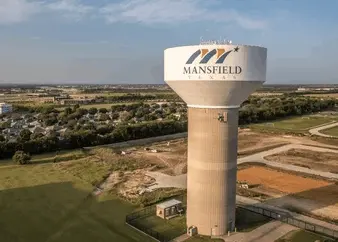
Mansfield vs. Midlothian, Texas

Housing Affordability: What Can Your Money Actually Buy?

What can your budget actually buy?

One of the biggest myths I hear is that Midlothian automatically gives buyers a significantly larger home.

After comparing current listings around the $450,000 price point, the reality is a little different.

In both cities, buyers are generally finding homes with:

Four bedrooms
Two to three bathrooms
Approximately 2,400–2,500 square feet
The major difference isn't size.

It's age.

In Mansfield, many homes around this price point are located in established neighborhoods and were built during the late 1990s and early 2000s.

You're often paying for mature neighborhoods, established amenities, convenience, and proximity.

In Midlothian, homes at similar price points are frequently much newer, many built within the last decade.

That means today's floorplans, open-concept living, larger kitchens, energy-efficient construction, and updated finishes.

If acreage is on your wish list, Midlothian also continues offering opportunities that have become increasingly rare inside Mansfield.

Before comparing purchase prices, it's also important to understand your monthly payment.

Current property tax rates between Mansfield ISD and Midlothian ISD are relatively similar, but HOA dues, PID assessments, MUD districts, homeowners insurance, and builder incentives can make a significant difference.

Mansfield ISD vs. Midlothian ISD

Mansfield ISD
Mansfield ISD is one of the largest school districts in the region, serving more than 35,000 students across nearly 50 campuses throughout Mansfield and portions of Arlington and Grand Prairie.

With multiple traditional high schools, intermediate schools, specialty campuses, and career academies, Mansfield ISD provides an incredible variety of opportunities.

Two of its biggest standouts include Frontier STEM Academy, nationally recognized for its innovative STEM curriculum, and Ben Barber Innovation Academy, which offers students career pathways, healthcare, engineering, business programs, technical certifications, and dual-credit opportunities while still in high school.

Because of its size, Mansfield ISD also offers extensive fine arts programs, athletics, Advanced Placement courses, Career & Technical Education, and specialized academic pathways that many districts simply cannot provide.

Midlothian ISD
Midlothian ISD offers a completely different—but equally attractive—experience.

Serving just over 11,000 students across approximately 14 campuses, including Midlothian High School and Midlothian Heritage High School, the district maintains a much smaller community feel.

If you've ever heard someone talk about Friday Night Lights in Texas, this is exactly the type of community they're describing. Football games become community events. Students, alumni, teachers, and residents all come together to support their schools. Academically, Midlothian ISD has earned impressive recognition as well.

Both Midlothian High School and Midlothian Heritage High School have been recognized among U.S. News & World Report's Best High Schools, and the district has also been named a finalist for the prestigious H-E-B Excellence in Education Awards, one of the highest honors awarded to school districts in Texas

Comparing

Mansfield ISD

VS

Midlothian ISD

One of the biggest reasons families compare Mansfield and Midlothian is because of the schools.
And honestly, this may be one of the toughest categories in this comparison because both districts are outstanding.
Rather than asking which district is "better," I encourage buyers to think about which educational experience best fits their family.
Mansfield ISD is one of the largest school districts in the region, serving more than 35,000 students across nearly 50 campuses throughout Mansfield and portions of Arlington and Grand Prairie.
With multiple traditional high schools, intermediate schools, specialty campuses, and career academies, Mansfield ISD provides an incredible variety of opportunities.
Two of its biggest standouts include Frontier STEM Academy, nationally recognized for its innovative STEM curriculum, and Ben Barber Innovation Academy, which offers students career pathways, healthcare, engineering, business programs, technical certifications, and dual-credit opportunities while still in high school.
Because of its size, Mansfield ISD also offers extensive fine arts programs, athletics, Advanced Placement courses, Career & Technical Education, and specialized academic pathways that many districts simply cannot provide.
Midlothian ISD offers a completely different—but equally attractive—experience.
Serving just over 11,000 students across approximately 14 campuses, including Midlothian High School and Midlothian Heritage High School, the district maintains a much smaller community feel.
If you've ever heard someone talk about Friday Night Lights in Texas, this is exactly the type of community they're describing.
Football games become community events.
Families fill the stands.
The school spirit is contagious.
Students, alumni, teachers, and residents all come together to support their schools.
Academically, Midlothian ISD has earned impressive recognition as well.
Both Midlothian High School and Midlothian Heritage High School have been recognized among U.S. News & World Report's Best High Schools, and the district has also been named a finalist for the prestigious H-E-B Excellence in Education Awards, one of the highest honors awarded to school districts in Texas.
When buyers ask me how I'd summarize these two districts, I usually explain it this way:
Mansfield ISD feels like a large suburban district with incredible resources, specialty academies, and endless opportunities.
Midlothian ISD feels like a close-knit hometown district where community involvement, school pride, and Friday Night Lights remain a huge part of everyday life.
Neither district is better.
They're simply different experiences.

Growth & The Future of These Cities

Both Mansfield and Midlothian have experienced remarkable growth over the last two decades.
In 2010, Mansfield had approximately 56,000 residents.
Today, that number has grown to more than 84,000.
Midlothian has experienced even greater percentage growth, expanding from approximately 18,000 residents in 2010 to nearly 45,000 today.
Even more impressive, both cities have added roughly 10,000 residents in just the last five years.
The difference is how that growth feels.
Mansfield is entering its next chapter by investing in destination-style developments.
The future Mansfield Riverwalk is planned to feature waterfront dining, walking trails, gathering spaces, entertainment, and public parks inspired by some of the country's most successful mixed-use developments.
The Staybolt District will transform more than 100 acres into an entertainment-focused destination featuring restaurants, retail, hospitality, housing, offices, and sports facilities.
 
Midlothian has taken a different approach.
Rather than focusing primarily on entertainment districts, the city has built an incredibly strong economic foundation through corporate investment.
Major employers including Google, Digital Realty, Medline Industries, and Gerdau continue investing hundreds of millions of dollars into technology, logistics, manufacturing, and infrastructure.
At the same time, Midlothian is investing heavily in revitalizing Historic Downtown through projects like Heritage Plaza, creating more walkable gathering spaces, restaurants, live entertainment, and local businesses while preserving the city's authentic character.
 
Both cities are growing.
They're simply growing in different directions.
Mansfield is becoming a destination.
Midlothian is becoming an economic powerhouse while working hard to preserve its hometown identity.
It certainly makes you wonder...
If both cities have grown this much in just the last five years, what will they look like five years from now?

Commuting Around the Metroplex

For many buyers, the daily commute becomes one of the biggest deciding factors.

Fortunately, both cities provide excellent access to major employment centers—but each has its own advantages.

Mansfield's central location is one of its biggest strengths.

Positioned where Tarrant, Johnson, and Ellis counties meet, residents enjoy convenient access to Fort Worth, Arlington, DFW Airport, and many major employment centers.

For households where one spouse works toward Fort Worth while the other commutes toward Dallas, Mansfield often provides an ideal middle ground.


Midlothian offers a different commuting advantage.

Located along Highway 67, many residents find commuting toward Dallas more direct and convenient.

For buyers working in Ellis County or southern Dallas County, Midlothian can reduce daily drive times considerably.

No matter which city you're considering, I always recommend driving your commute during rush hour before making a final decision.

You'll make that drive thousands of times over the years, and sometimes choosing the city that better fits your daily routine is just as important as choosing the perfect house.

Thinking About Moving to Mansfield or Midlothian?


Hi! I'm Stephanie Deeds, Broker and Owner of Point Realty.

For more than 14 years, I've helped hundreds of buyers relocate to Mansfield, Midlothian, Arlington, Burleson, and communities throughout the South of Cowtown area.

Every family has different priorities. Some want a shorter commute, others are looking for more land, top-rated schools, newer homes, or the perfect neighborhood.

That's where we come in.

Whether you're moving from another part of Texas or across the country, we'd love to help you compare communities, narrow your search, and make your move as smooth as possible.

Schedule Your Complimentary Relocation Consultation

 

StephanieDeedsRP_9144

FAQs

Frequently Asked Questions
 

Is Mansfield more expensive than Midlothian?

Generally, yes. Mansfield's established neighborhoods and central location often come with a higher price tag, especially when it comes to new construction.

Which city has better schools?

Which city has more new construction?

Which city has more things to do?