How to Sell Your Home and Buy Another at the Same Time: A Step-by-Step Guide
One of the most common concerns I hear from homeowners who are thinking about moving is:
“How can I sell my current home and buy my next home at the same time?”
For many homeowners, selling isn't the difficult decision. The bigger question is what happens next.
Do you need to sell before you start looking? What happens if you find the right home before yours sells? Can you use the equity from your current home toward your next purchase? Is it possible to coordinate both closings? And what happens if the timing doesn't work perfectly?
The good news is that you can sell your home while buying your next one. I help homeowners create a strategy that coordinates both transactions rather than treating the sale and purchase as two completely separate events.
There is no single strategy that works for every homeowner. Your finances, available equity, current mortgage, local housing market, expected selling timeline and the home you plan to purchase all play a role.
That's why my first piece of advice is always the same:
The time to start the conversation is now.
You don't need to be ready to list your house tomorrow. In fact, starting months before you expect to move often gives us more options and allows us to make better decisions.
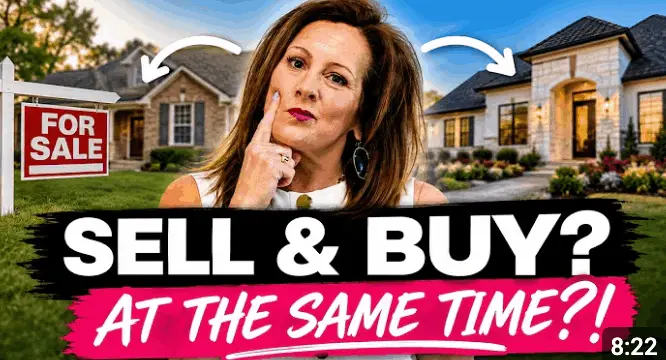
If you'd like to hear me explain the process in more detail, I also created a video covering how to sell your home and buy another at the same time.
Watch the full video on YouTube: How to Sell Your Home and Buy Another at the Same Time
Can You Sell a House and Buy Another at the Same Time?
Yes. It is possible to sell your current home while purchasing another home.
The important distinction is that selling and buying "at the same time" does not necessarily mean both transactions have to start on the same day.
Instead, I create a strategy that coordinates the two transactions.
For one homeowner, that may mean preparing and listing the current home before beginning a serious home search.
For another, it may mean getting the current home under contract and then making an offer on the next property.
Someone else may qualify to purchase the next home without selling first.
And in certain situations, financing options such as a bridge loan may provide another solution.
Before deciding which path makes sense, we need to understand your specific financial position and the market surrounding your current home.
Step 1: Start With a Listing Consultation
Before we spend weekends touring homes, I prefer to start with a comprehensive listing consultation for your current property.
This allows us to determine:
-
The probable market value of your current home
-
How much equity you may have available
-
What you could potentially net from the sale
-
How your home compares with competing properties
-
How long comparable homes are taking to sell
-
What repairs or preparation should be completed
-
How quickly we could realistically bring the property to market
-
Your ideal timeline for purchasing the next home
This information matters on the buying side, too.
If you need proceeds from your current home for the down payment on your next property, we need to plan around that.
If you need to sell your current home to qualify for the next mortgage, we need to know that before we begin making offers.
And if you don't need to sell first, we may have considerably more flexibility.
The listing consultation isn't simply about putting a price on your home. It is the beginning of your entire move strategy.
Step 2: Find Out What You Can Do Financially
One of the most important parts of this process happens before we begin seriously shopping for your next home.
We need to understand your financing options.
I work with trusted lending partners who understand the complexities of homeowners who are simultaneously selling and purchasing. They can evaluate your individual financial situation and help determine which options may be available.
You may discover that you need to sell your existing home before you can complete your next purchase.
You may qualify to purchase another home while continuing to own your existing property.
Or you may qualify for a financing option designed specifically to help bridge the gap between the two transactions.
Knowing this information early allows me to structure the real estate side of the transaction appropriately.
If you're considering a move and aren't sure where to begin, contact me. I can connect you with trusted lenders who specialize in helping homeowners evaluate these situations.
You don't need to know exactly when you're moving before having that conversation.
Step 3: Get Your Current Home Market-Ready
When a homeowner needs to sell in order to purchase, I generally prefer to have the current home ready to list or already on the market before we begin seriously touring homes.
There's an important reason for that.
Imagine finding the perfect next home and deciding you want to make an offer.
Meanwhile, your current home still needs repairs, decluttering, photographs, pricing, marketing and several weeks of preparation.
We've immediately created unnecessary pressure.
I'd rather do that work before we need it.
That means preparing your property, determining our pricing strategy and creating a strong marketing plan so we're ready when the right opportunity appears.
Step 4: Have an Actual Marketing Strategy for Your Home
When another purchase may depend upon your home selling, simply putting the property into the MLS isn't enough of a strategy.
Before we list, I want to know how we're going to position your property within the current market.
That includes evaluating competing homes, pricing appropriately, preparing the property for buyers and creating professional marketing designed to generate exposure.
Depending on the property, that may include professional photography, digital marketing, social media, email marketing, online real estate platforms and direct promotion to potential buyers.
Just as importantly, the strategy shouldn't stop when the listing goes live.
We need to continually evaluate showing activity, buyer feedback, competing listings and changing market conditions.
If your home isn't generating the activity we expected, we need to understand why and determine whether our strategy needs to change.
That's especially important when the sale of your current property affects your ability to purchase the next one.
Step 5: Begin the Search for Your Next Home
Once we have your current home prepared and understand your financial options, we can approach your home search much more confidently.
This is one of the reasons I generally don't recommend becoming deeply involved in house hunting before we've created the selling strategy.
Finding the house is often the easy part.
Being prepared to successfully purchase it is where planning becomes valuable.
If we find the right property, I already know:
-
The status of your current home
-
Your expected selling timeline
-
Your financial qualifications
-
Whether you need a contingency
-
What proceeds you may need from the sale
-
Which financing options are available
-
How quickly we may be able to close
Now we're making an offer based on information rather than trying to create a plan after you've already fallen in love with a house.
What Is a Home-Sale Contingency?
A home-sale contingency generally makes the purchase of another property dependent upon the buyer successfully selling an existing home.
For homeowners who need their current property to sell before completing their next purchase, this can be an important part of the transaction.
However, a contingency also matters to the seller receiving your offer.
Consider the difference between these situations:
Your home isn't listed yet.
Your home is actively listed for sale.
Your home is already under contract with a buyer.
In each situation, you may technically have a home to sell, but the strength of your position can be very different.
This is another reason I prefer to have the selling strategy underway before we find the property you want to purchase.
If we need to submit a contingent offer, I want to be able to provide as much confidence as possible about the sale of your current property.
The Current Housing Market Matters
There is no universal rule that says every homeowner should sell first or every homeowner should buy first.
The market matters.
In a highly competitive seller's market, sellers may have multiple offers and little incentive to consider an offer involving another property that must sell.
In a market where homes are taking longer to sell, the strategy changes.
That's especially relevant here in the Dallas-Fort Worth real estate market, where conditions can vary significantly by city, neighborhood and price range.
A homeowner selling in Mansfield may have a different strategy from someone selling in Arlington, Midlothian, Burleson, Grand Prairie or another part of North Texas.
Even within the same city, different neighborhoods and price points can behave very differently.
That's why I look at what is happening around your particular home, not simply at national real estate headlines.
Can You Close on Both Homes on the Same Day?
In many situations, we can work toward coordinating the sale of your current home and purchase of your next home on the same day.
When possible, I also like to coordinate the transactions through the same title company. Having the closings in the same location can make an already complicated moving day considerably easier.
A coordinated closing might look like this:
You close on the sale of your current property.
The necessary funds become available according to the transaction and closing requirements.
You then complete the purchase of your next home.
Instead of thinking about these as two unrelated closings, we're coordinating everyone involved so the transactions work together as smoothly as possible.
Of course, same-day closings aren't guaranteed. There are buyers, sellers, lenders, title companies and contractual deadlines involved in both transactions.
My job is to anticipate those moving pieces and keep everyone communicating.
What If You Can Buy Before You Sell?
This is where the conversation with a lender becomes especially valuable.
Some homeowners discover that they qualify to purchase their next property without selling their current home first.
If that's the case, our strategy can change significantly.
You may be able to purchase the next home, move, and then place your previous home on the market.
For some homeowners, that can remove much of the pressure involved in coordinating two transactions.
However, qualifying to purchase first doesn't automatically mean it's the right financial choice. We still need to evaluate your goals, carrying costs, expected sale timeline and overall financial picture.
The important thing is knowing whether the option exists.
What Is a Bridge Loan?
Another option some homeowners may want to explore is a bridge loan.
A bridge loan is a short-term financing option that may help a homeowner bridge the financial gap between purchasing a new property and selling an existing one.
Depending on the loan program and your qualifications, this type of financing may allow you to access funds or purchase your next property before the existing property has completed its sale.
Bridge loans aren't appropriate for every homeowner. Rates, costs, qualification requirements and loan structures vary.
This is why I don't want my clients trying to determine their financing strategy from an online calculator.
I have trusted lending partners who work with these situations. Contact me, and I can connect you with someone who can evaluate your actual numbers and explain the options available to you.
Should You Sell First or Buy First?
For most homeowners, I think this question is too simplistic.
The better question is:
How should we coordinate your sale and purchase?
If you need your equity or need the existing mortgage eliminated before qualifying for another home, getting the selling side underway is likely to be an important part of our strategy.
If you qualify to carry both homes, we may have additional options.
If appropriate bridge financing is available, that may create another path.
For many homeowners, the strategy isn't simply sell first or buy first.
It's:
Prepare to sell. Understand your financing. List strategically. Search for the next home. Structure the offer. Coordinate the transactions. Close and move.
That's what selling and buying at the same time really looks like.
What Happens If Your House Sells Before You Find Another?
This is one of the biggest fears homeowners have, and it's exactly why we discuss the possibilities before listing.
Depending on the circumstances, we may be able to negotiate timing that gives you additional flexibility. Other homeowners may choose temporary housing or another short-term arrangement rather than purchasing a home they don't truly want simply because they're facing a deadline.
The important thing is that we've discussed the possibility ahead of time.
I never want a client making a major real estate decision because we failed to plan for a potential outcome.
What Happens If You Find Your Next House Before Yours Sells?
Again, this depends on the strategy we've already created.
We may be able to make an offer contingent upon your home selling.
Your current property may already be under contract.
You may qualify to purchase without selling.
Or financing may provide another option.
This is exactly why the time to talk is before you've found the house.
Once you find a property you love, emotions and deadlines enter the equation.
Planning beforehand gives us more control.
Frequently Asked Questions About Selling and Buying at the Same Time
Can I buy another house before mine sells?
Possibly. Some homeowners qualify to purchase another property while continuing to own their current home. Others may have access to financing options that help facilitate the transition. A lender needs to evaluate your specific financial situation.
Do I have to sell my house before buying another?
No. Whether you need to sell first depends on your finances, mortgage qualifications, available equity and the terms of your next purchase.
Can I make an offer if my current home hasn't sold?
Yes, but the structure of the offer will depend on your financial qualifications and whether the purchase needs to be contingent upon selling your current property. The seller must also agree to the terms of your offer.
Can I use the equity in my current home to buy another house?
Homeowners frequently use proceeds from the sale of an existing property toward their next purchase. Depending on your financial circumstances, there may also be financing products that allow you to access equity before the sale is complete. A qualified lender can explain the options available to you.
Can I sell my house and buy another on the same day?
It may be possible to coordinate both closings for the same day. When the transactions are dependent upon one another, careful coordination among the real estate professionals, lenders and title company is especially important.
Should I start looking at houses before listing mine?
You can certainly research the market and begin learning what you like. However, if selling your current home is necessary for your next purchase, I generally recommend having your property market-ready or already listed before becoming serious about making offers.
How early should I talk to a Realtor if I want to sell and buy?
Now.
You don't need to be ready to move next month.
If you're considering a move six months from now, next year or simply wondering what would need to happen, that's enough reason to start the conversation.
Early planning gives us time to evaluate your home's value, discuss improvements, understand your equity, connect you with a lender and build a strategy without the pressure of an immediate deadline.
Thinking About Selling Your Home and Buying Your Next One?
If you're asking yourself how you could possibly sell your current house and purchase another one without creating a logistical nightmare, start by finding out what your options actually are.
I've spent more than a decade helping homeowners navigate real estate decisions throughout the Dallas-Fort Worth area, and one thing I've learned is that the easiest transactions usually begin with good planning long before the moving truck arrives.
You may need to sell before you buy.
You may be able to buy without selling first.
You may benefit from a bridge financing option.
Or we may coordinate your sale and purchase so they happen almost simultaneously.
We won't know which strategy is best until we look at your situation.
And the time to have that conversation is always now.
If you're thinking about making a move, contact me. We'll start by looking at your current home, your goals and your timeline. If financing is part of the question, I can also connect you with one of my trusted lending partners who specializes in helping homeowners navigate buying and selling at the same time.
You don't need to have everything figured out before you call.
That's what the planning conversation is for.
— Stephanie Deeds
Broker/Owner, Point Realty
Serving Mansfield, Arlington, Midlothian, Grand Prairie, Burleson, Fort Worth and the greater Dallas-Fort Worth area
This article provides general real estate information and is not financial, legal or tax advice. Financing programs, qualification requirements, contracts and market conditions vary. Individual circumstances should be reviewed with the appropriate licensed professionals.
Categories
- All Blogs 466
- Arlington, TX 7
- best deal 1
- broad street 1
- brokerage 1
- build your home 43
- builders 21
- building a business 3
- burleson 7
- buyers market 133
- buying a home 272
- closing costs 47
- Community 16
- community spotlight 2
- condominiums 12
- credit 9
- Dallas 2
- dallas property tax 2
- dallas real estate 71
- DFW Lifestyle 20
- dfw property tax 2
- down payment 47
- down payment assistance 6
- downsizing 36
- finances 38
- first time home buyer 144
- for sale by owner 19
- Fort Worth 7
- Fort Worth real estate 71
- home affordability 131
- home equity 42
- home insurance 6
- home loan 89
- home ownership 160
- home price 118
- home tips 69
- home value 113
- housing market 207
- interest rates 71
- investment 32
- leasing 2
- listing agent 13
- Living in DFW 15
- Living In Texas 10
- local events 7
- lower interest rate 6
- luxury homes 4
- Mansfield real estate 68
- Mansfield, TX 11
- Midcities 8
- Midlothian, TX 10
- money savings 1
- mortgage 78
- mortgage rates 65
- moving to Texas 24
- neighborhood news 6
- new construction 36
- new developments 1
- new home 64
- owning a home 64
- preapproval 30
- pricing your home 77
- property management 7
- property taxes 2
- real estate 221
- real estate agents 6
- real estate taxes 6
- real estate tips 194
- realtors 5
- relocating 13
- relocating to Texas 27
- rental 3
- renting 8
- restaurants 1
- savings 14
- school districts 2
- second home 30
- sellers 133
- selling and buying a house at the same time 11
- selling your home 146
- senior living 18
- state income tax 1
- texas property tax 2
- texas taxes 1
- things to do 1
- vacation home 7
- Veterans 3
- wealth 14
Recent Posts









GET MORE INFORMATION